
Where Did Current 'Church' Come From? What Constantine Changed and What Jesus Built
This is Part 6 of an 18-part series drawn from Kurt Olson's book, The Endgame of God. New posts publish every Wednesday at GoMultiply.org/blog.
SERIES NOTE: I've written about this before in "What Did Jesus Mean by 'Church?'" and the two-part "Where Did the Church Meet in the Bible?" on our blog. If you haven't read those, they're the foundation. Here I want to trace the history of how we got the building-based system — and what Jesus actually built.
Where Did the Sunday-Morning System Actually Come From?
Most of us assume the building-based, clergy-led, Sunday-morning model comes straight from the Bible. The historical record tells a different — and freeing — story.
Ask most Christians where the Sunday-morning, building-centered, clergy-led model of church comes from, and they will tell you it comes from the Bible. But does it really? Understanding where it actually came from is one of the most freeing things I know, because it hands the ministry back to ordinary believers.
Ask most Christians where the Sunday-morning, building-centered, clergy-led model of church comes from, and they will tell you it comes from the Bible. But does it really? Understanding where it actually came from is one of the most freeing things I know, because it hands the ministry back to ordinary believers.
The First Three Hundred Years
For roughly the first three hundred years, the church was persecuted, largely hidden, and it primarily met in homes. That was not a compromise or a fallback; it was where the most significant spiritual events took place.
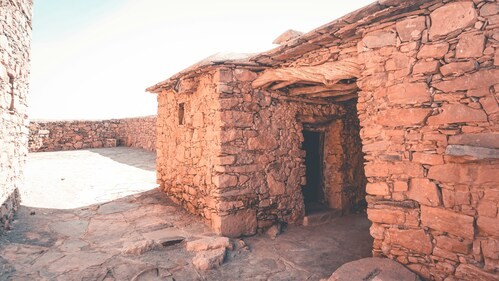
Dating back to the birth of Jesus, the wise men worshiped the child Jesus in a house (Matthew 2:11). The Holy Spirit was first poured out on the Jews, not in the temple or a synagogue, but in the upper room of a house where a hundred twenty believers were gathered (Acts 2:1–2). The Holy Spirit was poured out on the Gentiles in the house of Cornelius (Acts 10:25&44). The early believers "broke bread in their homes and ate together with glad and sincere hearts" (Acts 2:46), and Paul said that he taught and proclaimed Christ "publicly and from house to house" (Acts 20:20).
Even the way they used the temple courts was not at all what we mean by "going to church" today. The early disciples did not own the temple or run it; it was a public place, full of people who were not yet followers of Jesus, where the apostles boldly proclaimed that the very leaders in charge of that temple had crucified the Messiah. That is why it was dangerous for the believers to meet there. So, the Temple was the first public gathering of the church. The private gatherings took place in homes. In fact, when persecution came, notice where the persecutors went to find the church: Saul went "from house to house" dragging believers off to prison (Acts 8:3). The church was gathering in their homes.
Even the way they used the temple courts was not at all what we mean by "going to church" today. The early disciples did not own the temple or run it; it was a public place, full of people who were not yet followers of Jesus, where the apostles boldly proclaimed that the very leaders in charge of that temple had crucified the Messiah. That is why it was dangerous for the believers to meet there. So, the Temple was the first public gathering of the church. The private gatherings took place in homes. In fact, when persecution came, notice where the persecutors went to find the church: Saul went "from house to house" dragging believers off to prison (Acts 8:3). The church was gathering in their homes.
It Looks Like the Synagogue, Not the Upper Room
Here is a thought worth pondering. When you compare today's building-based church system to the practices of the New Testament church, today's church system doesn't resemble the early believers gathered in homes — it resembles the first-century synagogue system. A synagogue had a dedicated building, a ruler who presided, a set weekly service, Scripture readings, a sermon, prayers, an offering, and a benediction. Read that list again slowly. It is a remarkably close description of a typical Sunday morning in church today. The very form Jesus' first followers were raised in — the form He spent three years training out of them — is largely the form we have fallen back into. This doesn't make buildings sinful or Sunday gatherings wrong. But it should make us ask an honest question: are we operating more like the upper room disciples or like the synagogue system?
What Changed in the Fourth Century
So how did we get from where we started to where we are today? In the early fourth century, the emperor Constantine changed the spiritual landscape when he "invented Christianity." The faith moved, in a single generation, from persecuted to favored — and as it did, the outward forms of the surrounding pagan religion were gradually adopted and given Christian labels.
Temples became dedicated church buildings. A separated priestly class was formalized. Seminaries, altars with sacrifices, and special garments followed. The institution of religion, with its buildings and its professionals and its passive audience, overshadowed and gradually replaced the movement Jesus started. What began as a reproducing movement that met primarily in homes slowly became a religious organization like the one you may attend.
Even the Reformation Kept the Building
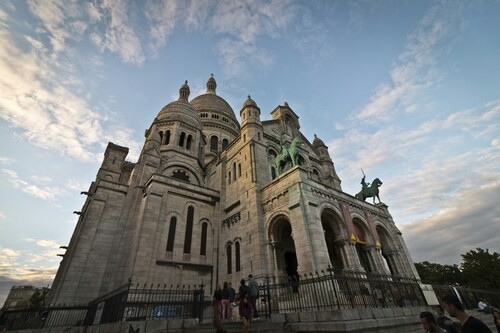
Here is the part that surprises many people. Centuries later, the Protestant Reformation gloriously recovered the Gospel of grace — salvation by faith in Christ alone. I thank God for it. But notice what it largely kept: the structure. The priest became the pastor. The Eucharist was replaced by the Sunday morning sermon. The building, the professional up front, and the passive seated, spectator congregation mostly remained unchanged. They reformed a great deal of our theology but very little of our operating system. The building-based old wineskin system survived the Reformation almost entirely intact.
What Jesus Actually Builds
Now consider that in light of Jesus' own words: "I will build my church, and the gates of hell will not prevail against it" (Matthew 16:18).
Two things in that sentence reframe everything.
Two things in that sentence reframe everything.
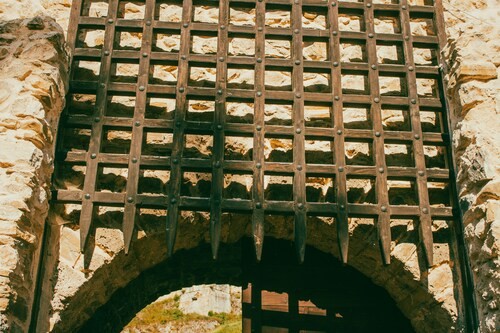
First, Jesus is the builder. He builds His ekklesia — His people gathered for His purposes — out of the disciples we make. The church is not a building He wants us to construct; it is His people that He assembles for His purposes. Second, look closely at "the gates of hell." Gates are defensive. A church cowering behind walls, hoping to survive, is not the picture of church Jesus painted. He described His ekklesia on the offensive, storming the gates of hell to rescue souls — and He promised those gates cannot hold.
None of this is meant to condemn anyone's church gathering, building, or any pastor. It is meant to free us. If the building-based system is a human (Constantinian) invention rather than a divine command, then we are free to recover the simple, reproducing, unstoppable life and practices of the early believers — meeting anywhere, at any time, and on any day, led by ordinary disciples, on the attack for the advancement of the Kingdom.
Read back through those New Testament examples — the worship, the healings, the Spirit poured out, the breaking of bread, all in homes. Does that change what the word "church" actually means to you, and where you believe the church of Jesus can gather?
None of this is meant to condemn anyone's church gathering, building, or any pastor. It is meant to free us. If the building-based system is a human (Constantinian) invention rather than a divine command, then we are free to recover the simple, reproducing, unstoppable life and practices of the early believers — meeting anywhere, at any time, and on any day, led by ordinary disciples, on the attack for the advancement of the Kingdom.
Read back through those New Testament examples — the worship, the healings, the Spirit poured out, the breaking of bread, all in homes. Does that change what the word "church" actually means to you, and where you believe the church of Jesus can gather?
This information is meant to free us, not to condemn anyone. Share it with a friend who loves God and/or church history and has never heard this, and go deeper at GoMultiply.org/resources and TimetoDiscipleAmerica.com.

Posted in Go Multiply Blog
Posted in church history, ekklesia, House Church, reformation, New Testament Church, Kurt Olson, Go Multiply
Posted in church history, ekklesia, House Church, reformation, New Testament Church, Kurt Olson, Go Multiply
Recent
Five Marks of a Disciple in Jesus' Day
October 7th, 2026
What Is a Disciple to Jesus? The Definition That Changes Everything
September 30th, 2026
Where Did Current 'Church' Come From? What Constantine Changed and What Jesus Built
September 23rd, 2026
Elephants and Rabbits: Two Models of Church, One Great Commission
September 16th, 2026
Jesus’ New Wine, Bursting Old Wineskins
September 9th, 2026
Archive
2026
April
June
July
August
September
Fishing With a Net: Why Jesus Always Went After Whole Communities not IndividualsJesus’ New Wine, Bursting Old WineskinsElephants and Rabbits: Two Models of Church, One Great CommissionWhere Did Current 'Church' Come From? What Constantine Changed and What Jesus BuiltWhat Is a Disciple to Jesus? The Definition That Changes Everything
2025
No Comments