
How should we live as Disciples of Jesus?
Jesus Doesn’t Call You to Admire Him. He calls you to obey Him, imitate Him, and gather more disciples to Him!
There is a version of the Christian life that looks something like this: go to church on Sunday morning, maybe join a small group during the week, give money to the church, try to be a good person, and occasionally (but almost never) share your faith when it feels right. It is a life that acknowledges Jesus — even loves Jesus — but reserves most of its daily energy for everything other than Jesus.
That is not the full life Jesus died to give you.
Jesus said, "If anyone would come after me(wants to be my follower), let him deny himself and take up his cross daily and follow me." (Luke 9:23, ESV) Daily. Not weekly. Not when convenient. Not as a supplement to an otherwise self-directed life. Daily denial. Daily cross-bearing. Daily following. This literally means to deny your own existence and embrace your own execution every day.
In John 8:31-32, He told the people who had believed in Him: "If you hold to (continue in or abide in) my teaching, you are really my disciples. Then you will know the truth, and the truth will set you free." (NIV) The mark of a true disciple is not just agreeing with what Jesus said. It is continually immersing yourself in what He said — living in it, obeying it, letting it shape every aspect of your life.
This doesn’t just apply to “full-time” missionaries, ministry leaders, or professional Christians. It is the standard Jesus set for every single person who desires to follow Him and calls Him Lord. It is critical for disciple-making too— because what someone considers to be the right way to follow Jesus will be what they will pass on to others.
That is not the full life Jesus died to give you.
Jesus said, "If anyone would come after me(wants to be my follower), let him deny himself and take up his cross daily and follow me." (Luke 9:23, ESV) Daily. Not weekly. Not when convenient. Not as a supplement to an otherwise self-directed life. Daily denial. Daily cross-bearing. Daily following. This literally means to deny your own existence and embrace your own execution every day.
In John 8:31-32, He told the people who had believed in Him: "If you hold to (continue in or abide in) my teaching, you are really my disciples. Then you will know the truth, and the truth will set you free." (NIV) The mark of a true disciple is not just agreeing with what Jesus said. It is continually immersing yourself in what He said — living in it, obeying it, letting it shape every aspect of your life.
This doesn’t just apply to “full-time” missionaries, ministry leaders, or professional Christians. It is the standard Jesus set for every single person who desires to follow Him and calls Him Lord. It is critical for disciple-making too— because what someone considers to be the right way to follow Jesus will be what they will pass on to others.
The Hybrid Problem
Most believers in the Western church today are living what could be called a hybrid lifestyle (or a double life). Part of their life is shaped by Jesus — their church attendance, their small group, their personal devotions. But the rest of their life is often shaped by the culture — their ambitions, their entertainment, their financial priorities, their other interests.
The problem is not that these believers don't love Jesus. Many of them genuinely do. The problem is that a hybrid lifestyle doesn’t produce true disciples. When someone is discipled by a person living a double life, the double life is what gets reproduced. The next generation of disciples often inherits not just the truth that was taught, but the pattern that was modeled.
Jesus addressed this directly. He said in Luke 14:26-27 that following Him requires loving Him above every other relationship and commitment — and that anyone who does not carry their cross and come after Him cannot be His disciple. And in Luke 14:33 He went further: "Any of you who does not give up everything he has cannot be my disciple." (NIV) Jesus gave up everything and carried His cross and He expects us to do the same.
He is not describing a split life. He is describing full surrender.
The Greek word for disciple — mathetes — describes a follower who is the apprentice of a master. In the first century, a disciple didn't just attend the rabbi's lectures. He followed the rabbi everywhere, imitated everything the rabbi did, memorized everything the rabbi taught, and spent every moment in close proximity to the master. It was a total-life commitment.
That was the understanding when Jesus said "Follow me." It was not a partial commitment with Jesus as one priority among many. It was a total-life reorientation around Him.
The problem is not that these believers don't love Jesus. Many of them genuinely do. The problem is that a hybrid lifestyle doesn’t produce true disciples. When someone is discipled by a person living a double life, the double life is what gets reproduced. The next generation of disciples often inherits not just the truth that was taught, but the pattern that was modeled.
Jesus addressed this directly. He said in Luke 14:26-27 that following Him requires loving Him above every other relationship and commitment — and that anyone who does not carry their cross and come after Him cannot be His disciple. And in Luke 14:33 He went further: "Any of you who does not give up everything he has cannot be my disciple." (NIV) Jesus gave up everything and carried His cross and He expects us to do the same.
He is not describing a split life. He is describing full surrender.
The Greek word for disciple — mathetes — describes a follower who is the apprentice of a master. In the first century, a disciple didn't just attend the rabbi's lectures. He followed the rabbi everywhere, imitated everything the rabbi did, memorized everything the rabbi taught, and spent every moment in close proximity to the master. It was a total-life commitment.
That was the understanding when Jesus said "Follow me." It was not a partial commitment with Jesus as one priority among many. It was a total-life reorientation around Him.
What the Great Commission Actually Requires of Us
In Matthew 28:18-20, Jesus gave His final command — one that has never been rescinded and remains in effect for every follower of Jesus today: "Go and make disciples of all nations, baptizing them in the name of the Father and of the Son and of the Holy Spirit, and teaching them to obey everything I have commanded you." (NIV)
Notice what He said to teach: not just to know His commands…to obey all of His commands. The goal of the teaching process is not knowledge accumulation. It is obedient disciples. And obedient disciples are the only kind of disciples Jesus wants us to multiply.
Notice what He said to teach: not just to know His commands…to obey all of His commands. The goal of the teaching process is not knowledge accumulation. It is obedient disciples. And obedient disciples are the only kind of disciples Jesus wants us to multiply.

Paul understood this. He wrote to Timothy: "The things you have heard me say in the presence of many witnesses, entrust to reliable people who will also be qualified to teach others." (2 Timothy 2:2, NIV) That is four generations of multiplication in one sentence — and every generation in that chain is defined by the same thing: people who have received, obeyed, and passed on. Not people who attended. Not people who agreed. People who lived it out and reproduced it.
The Great Commission pathway is not complicated. In the power of the Holy Spirit; Go. Preach the gospel. Baptize those who believe. And teach them to obey everything Jesus commanded. But it is demanding — because it requires disciples who are actually living the life they are trying to reproduce in others.
You cannot demonstrate obedience if you are not personally obeying. You will struggle to reproduce a life in others that you are not living yourself. The Great Commission requires full-fledged disciples — people whose entire life is oriented around obedience to Jesus, His teaching, His commands, and His mission — because those are the only people who can make the type of disciples Jesus desires.
The Great Commission pathway is not complicated. In the power of the Holy Spirit; Go. Preach the gospel. Baptize those who believe. And teach them to obey everything Jesus commanded. But it is demanding — because it requires disciples who are actually living the life they are trying to reproduce in others.
You cannot demonstrate obedience if you are not personally obeying. You will struggle to reproduce a life in others that you are not living yourself. The Great Commission requires full-fledged disciples — people whose entire life is oriented around obedience to Jesus, His teaching, His commands, and His mission — because those are the only people who can make the type of disciples Jesus desires.
What a True Discipleship Lifestyle Actually Looks Like
This is where the question gets practical. What does it actually look like to live as a genuine disciple in everyday life? Not in a monastery. Not on an overseas mission field. Right here, in ordinary life, with ordinary people, in ordinary circumstances.
It starts with surrender to the Lordship of Jesus Christ and a commitment to obey Jesus through the Word. A true disciple opens Scripture not to accumulate knowledge but to apply the knowledge they accumulate. Every passage is approached with the same questions that shape the Discovery Bible Study process: what does this tell me about God? What does it tell me about people (including myself)? And most importantly — how will I obey or apply this? And, who will I share it with?
That last question is the one that separates a passive spectator from a genuine multiplying disciple. When a person shares what they have received from Scripture with someone else, they are already doing the work of the Great Commission. They are passing on what they have been given. They are fishing for people, always searching for a hungry person so another group can start among the social network of the hungry fish.
In Matthew 4:19 (NKJV) Jesus said, “Follow Me and I will make you into fishers of men.” That means that if we claim to follow Him but don’t fish for people, we aren't actually following Him even if we say that we are.
A real disciple also lives with eyes open to the people God has placed or will place in their life. Jesus said the Father is drawing people to Jesus (John 6:44). That means the harvest is all around us — it is in the relationships you already have. Your family. Your neighbors. Your coworkers. The people you will cross paths with. The people who already know and trust you. A genuine disciple is not waiting for a special platform or a formal ministry opportunity. They are living ready — ready to share the gospel, ready to share their life, ready to help a few people gather around a Bible passage and ask the questions that develop real disciples.
This is not performance. And it’s not an add-on to an otherwise busy life. It is a Spirit led reorientation of life itself — where obedience to Jesus and commitment to His mission becomes the underlying motivation of everything in life. Then, ordinary moments and rhythms of life become the primary context for disciple-making.
It starts with surrender to the Lordship of Jesus Christ and a commitment to obey Jesus through the Word. A true disciple opens Scripture not to accumulate knowledge but to apply the knowledge they accumulate. Every passage is approached with the same questions that shape the Discovery Bible Study process: what does this tell me about God? What does it tell me about people (including myself)? And most importantly — how will I obey or apply this? And, who will I share it with?
That last question is the one that separates a passive spectator from a genuine multiplying disciple. When a person shares what they have received from Scripture with someone else, they are already doing the work of the Great Commission. They are passing on what they have been given. They are fishing for people, always searching for a hungry person so another group can start among the social network of the hungry fish.
In Matthew 4:19 (NKJV) Jesus said, “Follow Me and I will make you into fishers of men.” That means that if we claim to follow Him but don’t fish for people, we aren't actually following Him even if we say that we are.
A real disciple also lives with eyes open to the people God has placed or will place in their life. Jesus said the Father is drawing people to Jesus (John 6:44). That means the harvest is all around us — it is in the relationships you already have. Your family. Your neighbors. Your coworkers. The people you will cross paths with. The people who already know and trust you. A genuine disciple is not waiting for a special platform or a formal ministry opportunity. They are living ready — ready to share the gospel, ready to share their life, ready to help a few people gather around a Bible passage and ask the questions that develop real disciples.
This is not performance. And it’s not an add-on to an otherwise busy life. It is a Spirit led reorientation of life itself — where obedience to Jesus and commitment to His mission becomes the underlying motivation of everything in life. Then, ordinary moments and rhythms of life become the primary context for disciple-making.
The Building-Based Church System Cannot Produce This Alone
Herein lies a tension that most Christians in the Western church may have never considered: the building-based church model and the New Testament disciple-making model are not the same thing, and they do not produce the same results. In other words, a Christian church member is not the same thing as a genuine disciple of Jesus!
The building-based model trains people to gather and receive. It trains them to be consumers of spiritual content — to attend, to listen, to participate in programs, and to give financially. These are not bad things. But they are not found among the commands of Christ. And they don’t train people to obey, share, and multiply. If a person's entire formation as a follower of Jesus happens inside the building-based system, they will almost certainly never make disciples outside of it.
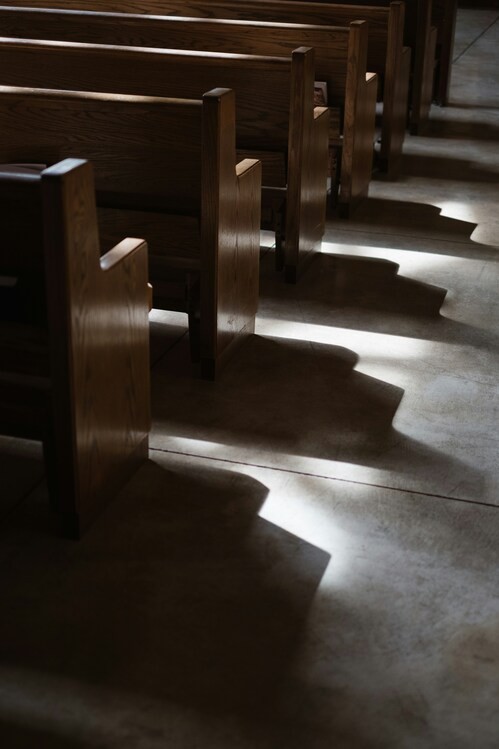
This is not a criticism of the people in those systems. Most of them love Jesus sincerely. The problem is structural..with the system itself. As Go Multiply's spiritual firewall question asks: where do we see this in the practices of Jesus and/or the New Testament church? The New Testament church was not building-based. It was household-based, relationship-based, and movement-based. Its primary mode of operation was ordinary disciples living obedient lives in ordinary places and reproducing obedience to Jesus in the people around them.
The two models can coexist — but they cannot be treated as equal. A person who attends a building-based church and also participates in a discipleship group is living a hybrid lifestyle. That hybrid period may be a transitional step for some people. But it is not the destination. The destination is a life so fully oriented around Jesus and His mission that disciple-making happens naturally, in the flow of daily life, without needing a building, programs, or professional Christians to sustain it.
That is the life Jesus called His followers to. It is a life that intentionally multiplies.
The two models can coexist — but they cannot be treated as equal. A person who attends a building-based church and also participates in a discipleship group is living a hybrid lifestyle. That hybrid period may be a transitional step for some people. But it is not the destination. The destination is a life so fully oriented around Jesus and His mission that disciple-making happens naturally, in the flow of daily life, without needing a building, programs, or professional Christians to sustain it.
That is the life Jesus called His followers to. It is a life that intentionally multiplies.
Three Questions That Shape a Discipleship Lifestyle
Moving to a genuine discipleship lifestyle may not require a dramatic life upheaval. It simply requires a reorientation — a daily decision to let these three questions and a desire to multiply disciples shape how you live:
These three questions, asked genuinely and consistently in ordinary life, produce the kind of disciples who multiply. They are simple enough for anyone to practice. And they are powerful enough to start a disciple-making movement.
- What did Jesus say? Open Scripture. Read His words. Not to check a box on your to do list but to hear from God directly. A full-fledged disciple is not dependent on a weekly sermon to receive spiritual nourishment. They have learned to feed themselves — and others — directly from the Word.
- How will I obey? Almost every passage of Scripture has an application. Every teaching of Jesus has an implied or direct command in it. The question is not whether you understand it. The question is whether you will do it. Obedience is the measure of maturity in the disciple-making model — not knowledge, not attendance, not years of experience. James said it plainly: the person who hears the Word but does not do it has deceived themselves (James 1:22). Obedience is essential for all who truly follow Jesus!
- Who will I tell? This is the question that turns personal discipleship into multiplication. A full-fledged disciple is not content to grow alone. They are always looking for someone to bring along — someone to share what they are learning with, someone to help start another DBS, someone to help take the next step of obedience. Paul's pattern in 2 Timothy 2:2 still applies today: receive, obey, entrust to others who will do the same.
These three questions, asked genuinely and consistently in ordinary life, produce the kind of disciples who multiply. They are simple enough for anyone to practice. And they are powerful enough to start a disciple-making movement.
The Urgency of Now
Today in 2026 there are still roughly 2 billion people on earth who have never heard the name of Jesus Christ. Every day, approximately 43,000 people from unreached people groups die and go to hell without ever having had the opportunity to accept or reject Jesus Christ. This is not because they chose against Him, but because no one has told them about Him.
That reality demands we all live as full-fledged disciples doing everything we can to finish the Great commission at home and abroad. Not as complacent Christian’s who never make any disciples. Disciples who have organized their entire lives around the mission of Jesus — who live ready, who pray continually, who share naturally, who reproduce consistently.
The apostle Peter said that we should "look forward to the day of God and speed its coming." (2 Peter 3:12, NIV) Ask yourself honestly: is the way I am currently living speeding the return of Christ? Or am I living in a way that is largely indistinguishable from the culture (except for Sunday morning) — with Jesus as one priority among many, and the Great Commission as something I agree should be finished, but not something I am personally participating in?
Jesus built repetition into the process. He gave a command — the Great Commission — to His obedient disciples so that every future generation of His followers would also be taught to obey all of His commands. That means this generation, right now, is required to go, preach, baptize, and teach obedience to all His commands. Not some of us. All of us. Not when we feel ready. Now.
A divided life will not produce true disciples. But an obedient life — a genuine discipleship life — will bear fruit that remains (John 15:16).
That reality demands we all live as full-fledged disciples doing everything we can to finish the Great commission at home and abroad. Not as complacent Christian’s who never make any disciples. Disciples who have organized their entire lives around the mission of Jesus — who live ready, who pray continually, who share naturally, who reproduce consistently.
The apostle Peter said that we should "look forward to the day of God and speed its coming." (2 Peter 3:12, NIV) Ask yourself honestly: is the way I am currently living speeding the return of Christ? Or am I living in a way that is largely indistinguishable from the culture (except for Sunday morning) — with Jesus as one priority among many, and the Great Commission as something I agree should be finished, but not something I am personally participating in?
Jesus built repetition into the process. He gave a command — the Great Commission — to His obedient disciples so that every future generation of His followers would also be taught to obey all of His commands. That means this generation, right now, is required to go, preach, baptize, and teach obedience to all His commands. Not some of us. All of us. Not when we feel ready. Now.
A divided life will not produce true disciples. But an obedient life — a genuine discipleship life — will bear fruit that remains (John 15:16).
Where Do You Go From Here?
The path forward is not complicated. But it does require a decision.
Start with the teachings of Jesus today. Not a devotional about the bible. Not a podcast about Scripture. Scripture itself — the words of Jesus, read directly, with the question: what does He require me to do?
Then obey that thing. Not everything at once. One step at a time. Tell someone what you are learning. Start a Discovery Bible Study among the friends and family of that person. Open your home to a few people and ask the questions that shape disciples. Name a real person you will share with this week and set a real time and actually do it.
And then do it again next week. And the week after that. Until obedience is no longer an event in your life but the rhythm of it. Until disciple-making is the way you live every day.
That is what a true disciple looks like. Not perfect. Not professional. Just obedient — consistently, humbly, and reproducibly — until the whole world hears and obeys.
"Truly, truly, I say to you, whoever hears my word and believes him who sent me has eternal life. He does not come into judgment, but has passed from death to life." — John 5:24, ESV
Start with the teachings of Jesus today. Not a devotional about the bible. Not a podcast about Scripture. Scripture itself — the words of Jesus, read directly, with the question: what does He require me to do?
Then obey that thing. Not everything at once. One step at a time. Tell someone what you are learning. Start a Discovery Bible Study among the friends and family of that person. Open your home to a few people and ask the questions that shape disciples. Name a real person you will share with this week and set a real time and actually do it.
And then do it again next week. And the week after that. Until obedience is no longer an event in your life but the rhythm of it. Until disciple-making is the way you live every day.
That is what a true disciple looks like. Not perfect. Not professional. Just obedient — consistently, humbly, and reproducibly — until the whole world hears and obeys.
"Truly, truly, I say to you, whoever hears my word and believes him who sent me has eternal life. He does not come into judgment, but has passed from death to life." — John 5:24, ESV
Ready to move from a hybrid life to a full-fledged discipleship lifestyle? Find the Discovery Bible Study process, suggested Scripture tracks, and discipleship resources at GoMultiply.org. To learn more about what God is doing through ordinary disciples right here in America, visit TimetoDiscipleAmerica.com.
One Final Thought...
Jesus desires us to be conformed into the image of Christ (Romans 8:29) and to be attaining the fullness of the stature of Christ (Ephesians 4:13). This means that we are ALL supposed to be becoming more and more like Jesus each and every day. You may have thought of this before, but Jesus obeyed every command that He commands His followers to obey, which means that as we obey Him we will become like Him. Therefore, the life of a follower of Christ must be a life of obedience to all the commands of Christ so that we become like Christ!

Posted in Go Multiply Blog
Posted in discipleship, obedience, DMM, multiplication, Great Commission, full surrender, disciple-making, lifestyle
Posted in discipleship, obedience, DMM, multiplication, Great Commission, full surrender, disciple-making, lifestyle
Recent
Five Marks of a Disciple in Jesus' Day
October 7th, 2026
What Is a Disciple to Jesus? The Definition That Changes Everything
September 30th, 2026
Where Did Current 'Church' Come From? What Constantine Changed and What Jesus Built
September 23rd, 2026
Elephants and Rabbits: Two Models of Church, One Great Commission
September 16th, 2026
Jesus’ New Wine, Bursting Old Wineskins
September 9th, 2026
Archive
2026
April
June
July
August
September
Fishing With a Net: Why Jesus Always Went After Whole Communities not IndividualsJesus’ New Wine, Bursting Old WineskinsElephants and Rabbits: Two Models of Church, One Great CommissionWhere Did Current 'Church' Come From? What Constantine Changed and What Jesus BuiltWhat Is a Disciple to Jesus? The Definition That Changes Everything
2025
No Comments