
What Jesus Actually Said to Do: Unpacking the Full Great Commission
This is Part 2 of an 18-part series drawn from Kurt Olson's book, The Endgame of God. New posts publish every Wednesday at GoMultiply.org/blog.
Should Jesus and His Followers Have the Same Goal?
Some of us can quote the Great Commission. Even fewer have ever slowed down to notice what Jesus actually commands — and what He clearly does not.
Should Jesus and His followers have the same goal? Of course we should. Imagine the confusion if we didn't — it would be like a coach and his team taking the field with two completely different game plans. If we hope to participate in what Jesus came to accomplish, then His goal has to become ours. So the first question is simple: what exactly is that goal, and did He tell us how to fulfill it? He did. Most of us have simply never slowed down long enough to notice.
Should Jesus and His followers have the same goal? Of course we should. Imagine the confusion if we didn't — it would be like a coach and his team taking the field with two completely different game plans. If we hope to participate in what Jesus came to accomplish, then His goal has to become ours. So the first question is simple: what exactly is that goal, and did He tell us how to fulfill it? He did. Most of us have simply never slowed down long enough to notice.
Final Instructions Still in Force
Think of it this way. If good parents had to leave a teenager home alone for six months, they wouldn't just walk out the door and hope for the best. They would give clear final instructions before they left — and those instructions would stay in force the entire time they were gone. That is exactly the situation the church is in today. Jesus gave us His final instructions before He left, and He has not come back yet. So those instructions are still in force today. The question is whether or not we, as His followers, are obeying them.

One Command, Three "Hows"
The most familiar of the Great Commissions is found in Matthew 28:18-20: "All authority in heaven and on earth has been given to me. Therefore go and make disciples of all nations, baptizing them in the Name of the Father, in the Name of the Son, in the name of the Holy Spirit, and teaching them to obey everything I have commanded you. And surely I am with you always, to the very end of the age."
At first glance it looks like a list of four commands. But in the original language, Jesus gives only one actual (primary) command: make disciples. The other three — going, baptizing, and teaching obedience to His commands — are secondary commands that explain how to carry out the command. If you tell your child to clean the kitchen by washing the dishes, mopping the floor, and wiping the counters, the primary command is "clean the kitchen"; the others are secondary commands explaining how to clean the kitchen. In the same way, going, baptizing, and teaching obedience to all His commands are Jesus' prescription for how to disciple nations.
At first glance it looks like a list of four commands. But in the original language, Jesus gives only one actual (primary) command: make disciples. The other three — going, baptizing, and teaching obedience to His commands — are secondary commands that explain how to carry out the command. If you tell your child to clean the kitchen by washing the dishes, mopping the floor, and wiping the counters, the primary command is "clean the kitchen"; the others are secondary commands explaining how to clean the kitchen. In the same way, going, baptizing, and teaching obedience to all His commands are Jesus' prescription for how to disciple nations.
Four Steps, Not Just One Passage
The Great Commission is not only found in Matthew. Mark adds a detail Matthew leaves out: "Go into all the world and preach the Good News to all creation. Anyone who believes and is baptized will be saved…" (Mark 16:15-16). Add that detail to Matthew's record and a clear four-step process emerges: Go. Preach the Gospel. Baptize those who believe. And teach those baptized believers to obey everything Jesus commanded — which, of course, includes the command to go and make more disciples. That last step, disciples making disciples, is the key to multiplication.
Shedding More Light
Three more passages provide us with a complete Great Commission. In Luke 24:47, Jesus says repentance and forgiveness must be preached in His name to all nations — so repentance must be part of the Gospel we preach, because without it there is no forgiveness and without forgiveness there is no salvation. In John 20:21 Jesus says, "As the Father has sent me, so I am sending you" — we go in the same way He went. And in Acts 1:8 He promises, "you will receive power when the Holy Spirit comes upon you and you will be my witnesses…to the ends of the earth" — so this is not a task we perform in our own strength. We can only disciple the nations in the power of the Holy Spirit.
Combine all these passages and His final command reads something like this: The one with ALL authority in the universe says, "Go disciple the whole world, in the power of the Holy Spirit, and preach the Good News of repentance for the forgiveness of sins to everyone, everywhere. Baptize those who believe, and teach them to obey everything He commanded. In this way, you will disciple all the nations. And remember, I am always with you as you work to accomplish this."
Combine all these passages and His final command reads something like this: The one with ALL authority in the universe says, "Go disciple the whole world, in the power of the Holy Spirit, and preach the Good News of repentance for the forgiveness of sins to everyone, everywhere. Baptize those who believe, and teach them to obey everything He commanded. In this way, you will disciple all the nations. And remember, I am always with you as you work to accomplish this."
What He Did Not Say
Now here is where it may get uncomfortable. Look back over those passages and notice what Jesus did not say. He never said to build religious buildings, make passive spectator Christian church members, or ordain a special clergy class of professional Christians to carry the bulk of the work of ministry. He never said to gather in the same room, on the same day, each week to listen to a religious speech. He also never said to preach to people who are already saved. I am not attacking anyone's religious practices. I'm simply pointing out that much of what we call "ministry" today is not found among the final commands of Christ or the practices of the New Testament church. At the same time, much of what He did command quietly goes undone.
The Goal Behind the Goal
A plan matters more if we share the motivation behind it. Why did Jesus give this final command? He told us plainly: "the Son of Man came to seek and save those who are lost" (Luke 19:10) — that is what motivated Him to go to the cross. If we share His goal, our lives should be organized around that same purpose. Yet, sadly, most Christian church members never personally participate in that goal. Instead, Christians tend to use the vocabulary of missions while arranging their lives around comfort, convenience, and enjoyment. Jesus never separated the command from the compassion. He wept over a city and with a grieving family. He leaves the ninety-nine to go after the one.
Do You Feel Comfortable Saying It?
So let me leave you with a challenge. Much of the church world uses the word "disciple" without actually knowing what Jesus meant by the word — therefore, they end up producing something less than what He intended. Leaders often assure me that they "have discipleship." Only later do I discover that they mean better attendance, higher giving, and more volunteering, while actual obedience to all the commands of Jesus is usually not expected.
So here is a test: can you share the Gospel, clearly, in your own words, in under a minute? Jesus' own first Gospel message was about nineteen words: "The time has come. The Kingdom of Heaven is near. Repent of your sins and believe the Good News!" (Mark 1:15). You do not need a seminary degree — just a clear Gospel, a heart that has counted the cost, and the obedience to open your mouth.
So here is a test: can you share the Gospel, clearly, in your own words, in under a minute? Jesus' own first Gospel message was about nineteen words: "The time has come. The Kingdom of Heaven is near. Repent of your sins and believe the Good News!" (Mark 1:15). You do not need a seminary degree — just a clear Gospel, a heart that has counted the cost, and the obedience to open your mouth.
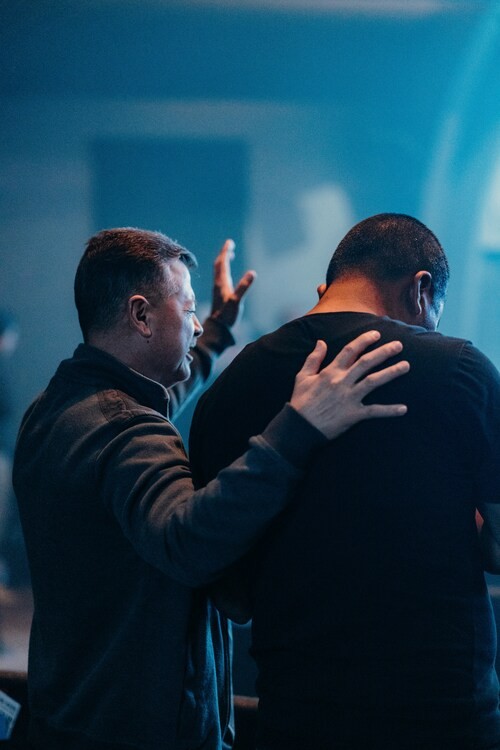
Now, slowly read the above passages again and write down what they actually command and expect from you. Now write down, just as honestly, what your church experience — and your own life — expects of you. Where do the two lists overlap, and where do they not?
The Great Commission is simpler than we've made it, and it applies to you every bit as much as to any professional Christian. Read the next post in the series, and share this one with someone who has never taken part in the Great Commission. You'll find tools to help you start at GoMultiply.org/resources and TimetoDiscipleAmerica.com.

Posted in Go Multiply Blog
Posted in Great Commission, disciple-making, discipleship, obedience, gospel, Kurt Olson, Go Multiply
Posted in Great Commission, disciple-making, discipleship, obedience, gospel, Kurt Olson, Go Multiply
Recent
How to Do a Discovery Bible Study: Learning Directly From God
October 21st, 2026
Obedience Is Not Optional: What Happens When Christians Stop Obeying Jesus
October 14th, 2026
Five Marks of a Disciple in Jesus' Day
October 7th, 2026
What Is a Disciple to Jesus? The Definition That Changes Everything
September 30th, 2026
Where Did Current 'Church' Come From? What Constantine Changed and What Jesus Built
September 23rd, 2026
Archive
2026
April
June
July
August
September
Fishing With a Net: Why Jesus Always Went After Whole Communities not IndividualsJesus’ New Wine, Bursting Old WineskinsElephants and Rabbits: Two Models of Church, One Great CommissionWhere Did Current 'Church' Come From? What Constantine Changed and What Jesus BuiltWhat Is a Disciple to Jesus? The Definition That Changes Everything
2025
No Comments